
Why Your Home Gets Messy Again (Even After Decluttering)
If this keeps happening, you’re not doing anything wrong. Your home simply needs better systems.
If you’ve decluttered your home more than once and still feel like the mess slowly returns, you’re not alone — and you’re not failing.
Most people assume the issue is motivation or consistency. In reality, the problem is much simpler and much more fixable.
Your home is not set up to support your daily habits.
Decluttering removes excess. What keeps a home orderly long-term are small, invisible systems that guide where things go when you are busy, tired, or distracted.
And that is something you can change.
Decluttering Helps Temporarily. Systems Help Daily.
Decluttering usually comes in short bursts — a weekend clean, a seasonal refresh, or a moment you want things to feel lighter. That helps, but only temporarily.
Daily life happens in automatic moments:
Dropping your bag when you come in
Putting mail down while cooking
Changing clothes after work
Setting something down “for now”
These actions are unconscious. If your home doesn’t give you easy spots for things, clutter comes back. The aim isn’t to try harder — it’s to make the right action the easy one.

Notice Where Things Collect — That’s Where a System Is Missing
Instead of asking why your home gets messy, start noticing where it gets messy.
These spots are not random. They are clues.
Mail always lands on the kitchen counter
Clothes always land on a chair
Shoes always gather near the door
Kitchen tools stay out instead of being put away
These areas show you exactly where your home needs support.
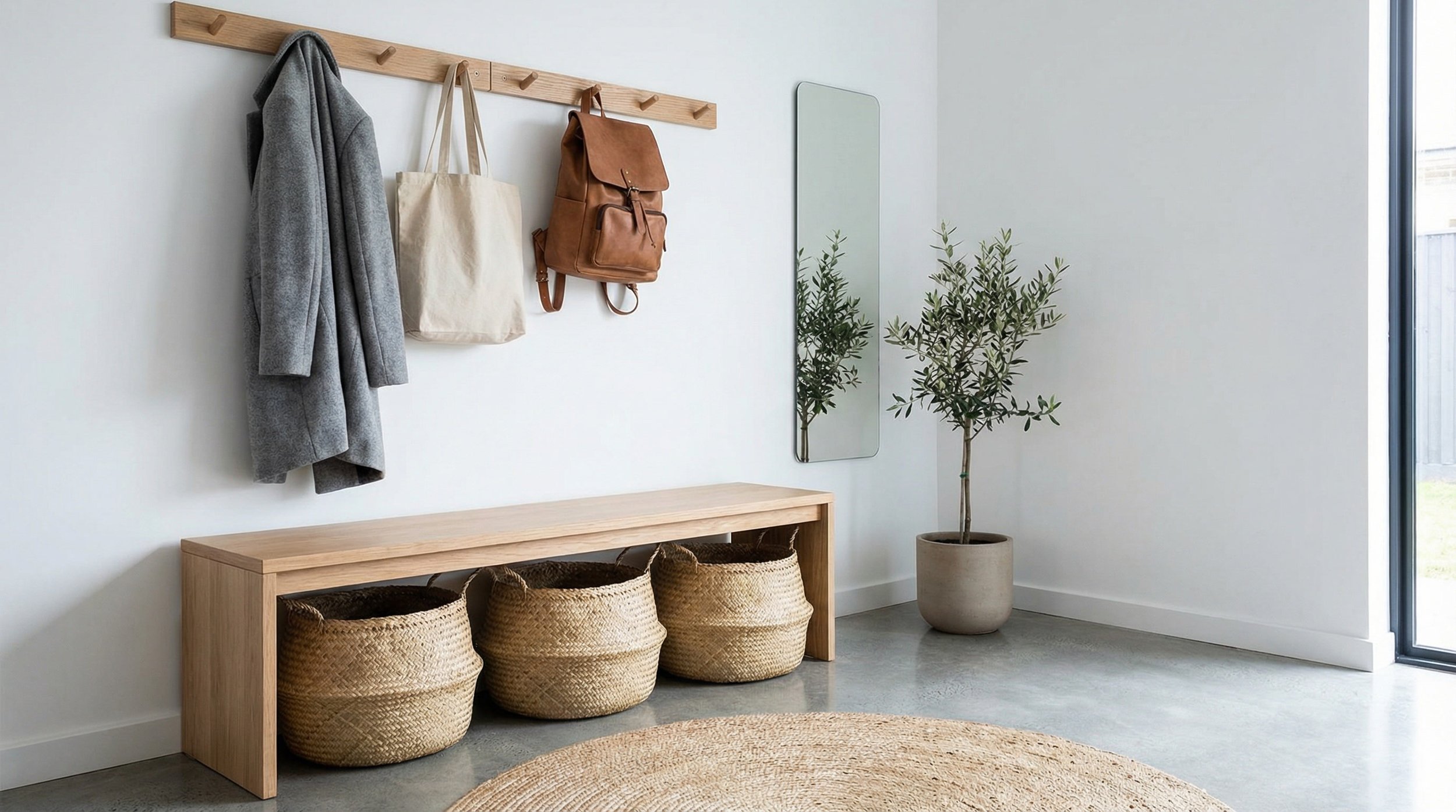
For example, if mail lands on the counter, you don’t need more discipline — you need a tray exactly where you stand when you walk in.

You Don’t Need More Motivation. You Need Less Friction.
When putting something away feels harder than leaving it out, it will be left out.
This is normal human behavior.
Simple systems remove this friction:
A basket instead of a closed box
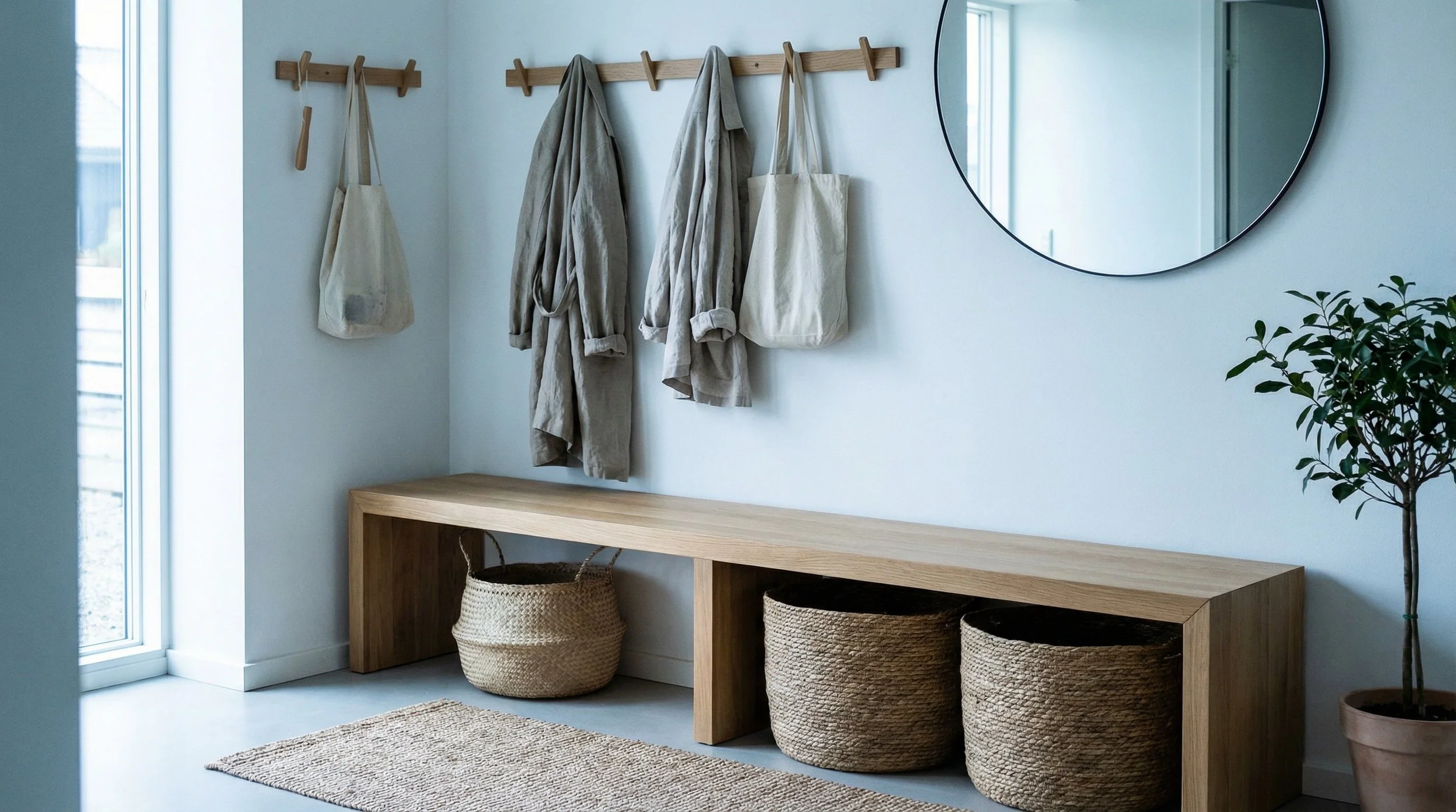
Hooks instead of hangers
Trays instead of drawers
Storage placed where the item naturally lands
When the correct action becomes the easiest one, you don’t have to think about tidying anymore.


The Chair With Clothes Is Not a Bad Habit
Almost every home has a chair where clothes collect. This happens because you need a place for clothing that is not dirty but not ready to return to the closet.
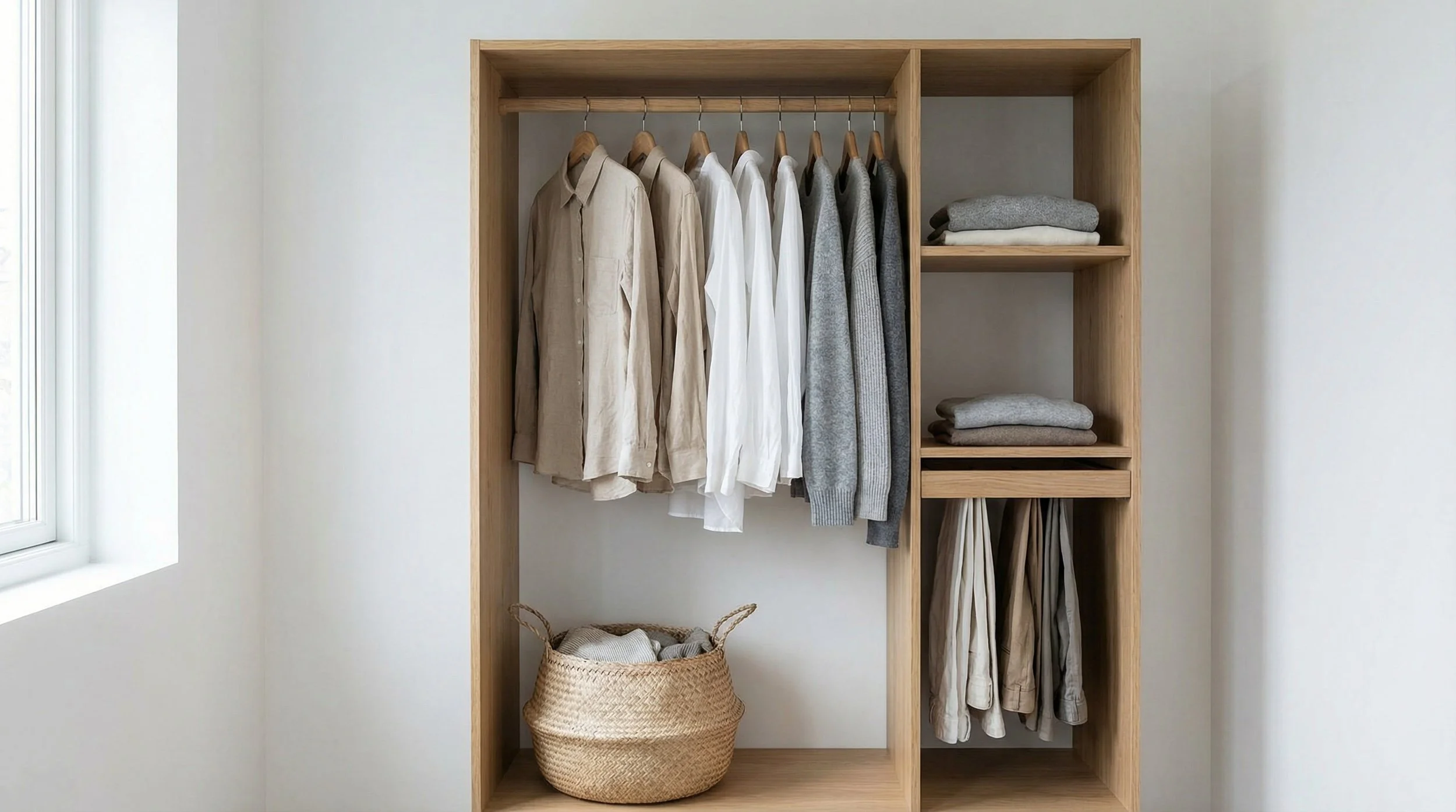
The solution is not to stop using the chair. The solution is to give those clothes a proper place:
A wall hook
A small rail
A basket
Once that place exists, the chair stops being used without any effort.


Surfaces Become Storage When Storage Is Inconvenient
Counters, tables, and dressers fill up when putting items away requires opening doors, moving things, or thinking about where they belong.
This is not laziness. It is efficiency.
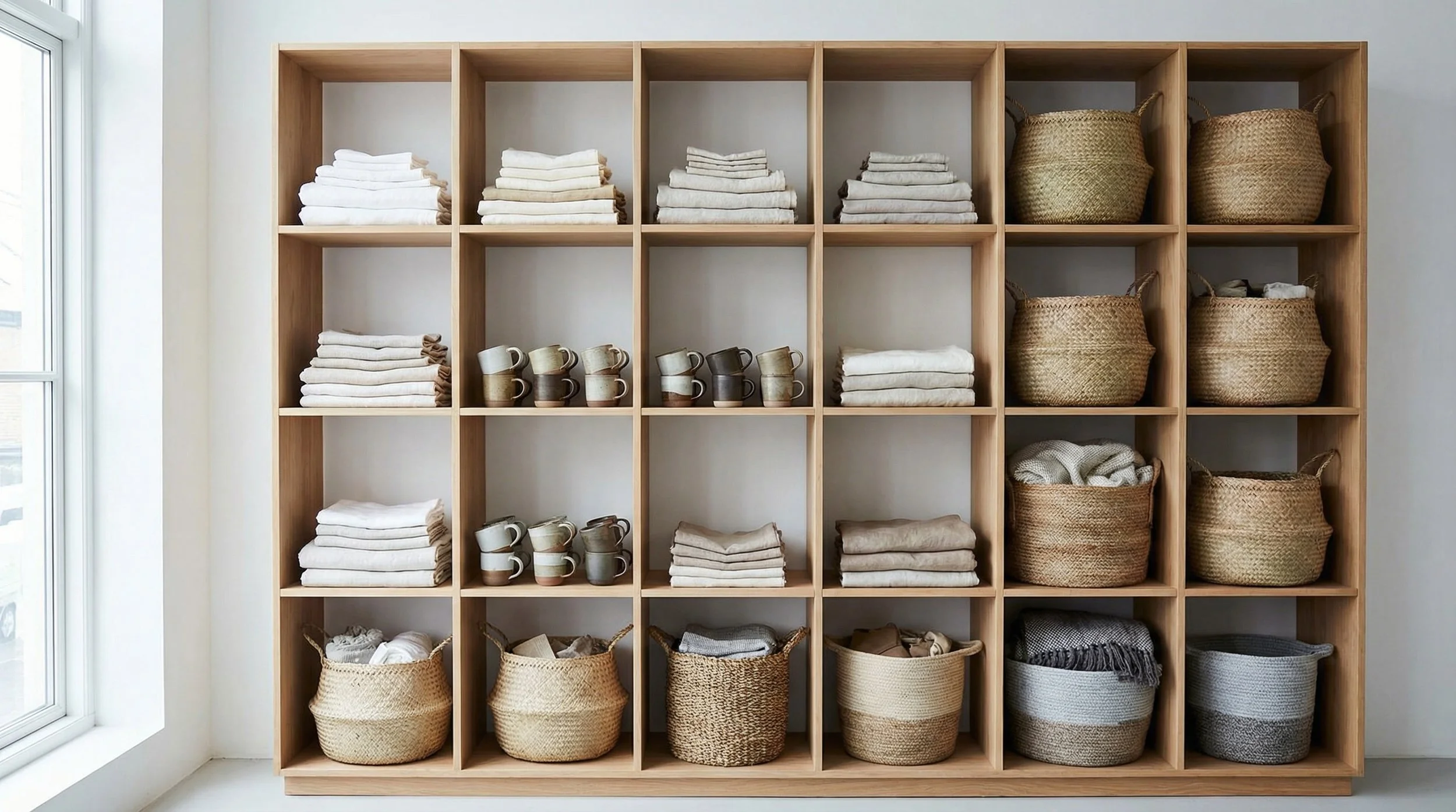
Open, reachable storage makes it easier to put things back than to leave them out.


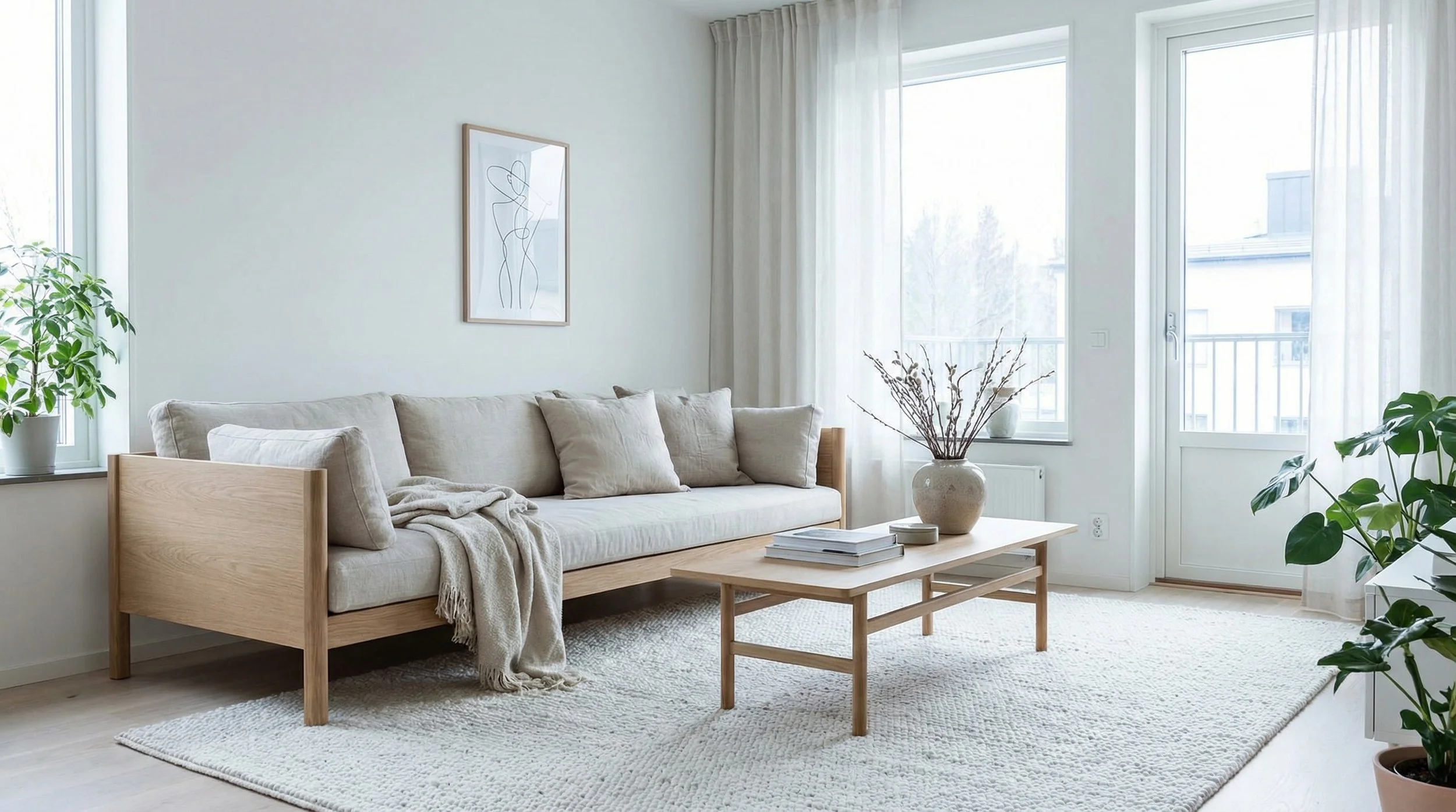
Why Scandinavian Homes Stay Tidy Longer
Scandinavian interiors often feel calm and orderly not because people there are more disciplined, but because the homes are designed around everyday life.
They include:
Easy access storage
Space around objects
Logical zones for daily items
Furniture that supports routine
The design helps the person, not the other way around.

The Question That Solves the Problem
Instead of asking, “What should I declutter next?” ask:
“Why does this item always end up here?”
That question shows you the missing system.
Once you add it, the clutter stops returning.
A Small Shift That Changes Everything
You don’t need to remove more things. You need to make it easier for things to return to where they belong.
That is the difference between decluttering and designing a home that stays orderly.
If your home keeps getting messy after decluttering, it is not a failure of effort. It is simply a sign that your space needs better systems.
When every item has a convenient place to return to, tidiness becomes automatic. You stop trying to keep the house organized — and it simply stays that way.
How to Design Systems Room by Room
Once you understand that clutter returns because items do not have easy return places, the next step becomes practical: adjust your home to match how you actually move through it each day.
You are not trying to make your habits more disciplined. You are adjusting your environment to support the habits you already have.
This is exactly why Scandinavian homes feel easier to maintain. They are arranged around daily flow, not decorative perfection.
Entryway: Where Most Disorder Begins
The entryway is the first place clutter forms because it is the transition point between outside life and inside life.
This is where you drop:
Shoes
Bags
Coats
Mail
Keys
If this area has no clear system, these items spread into the rest of the house.
A functional entryway does not need to be large. It needs:
Hooks at arm level for coats and bags
A bench with baskets underneath for shoes
A small tray or shelf for keys and mail
When these elements are present, items stop migrating beyond this space.


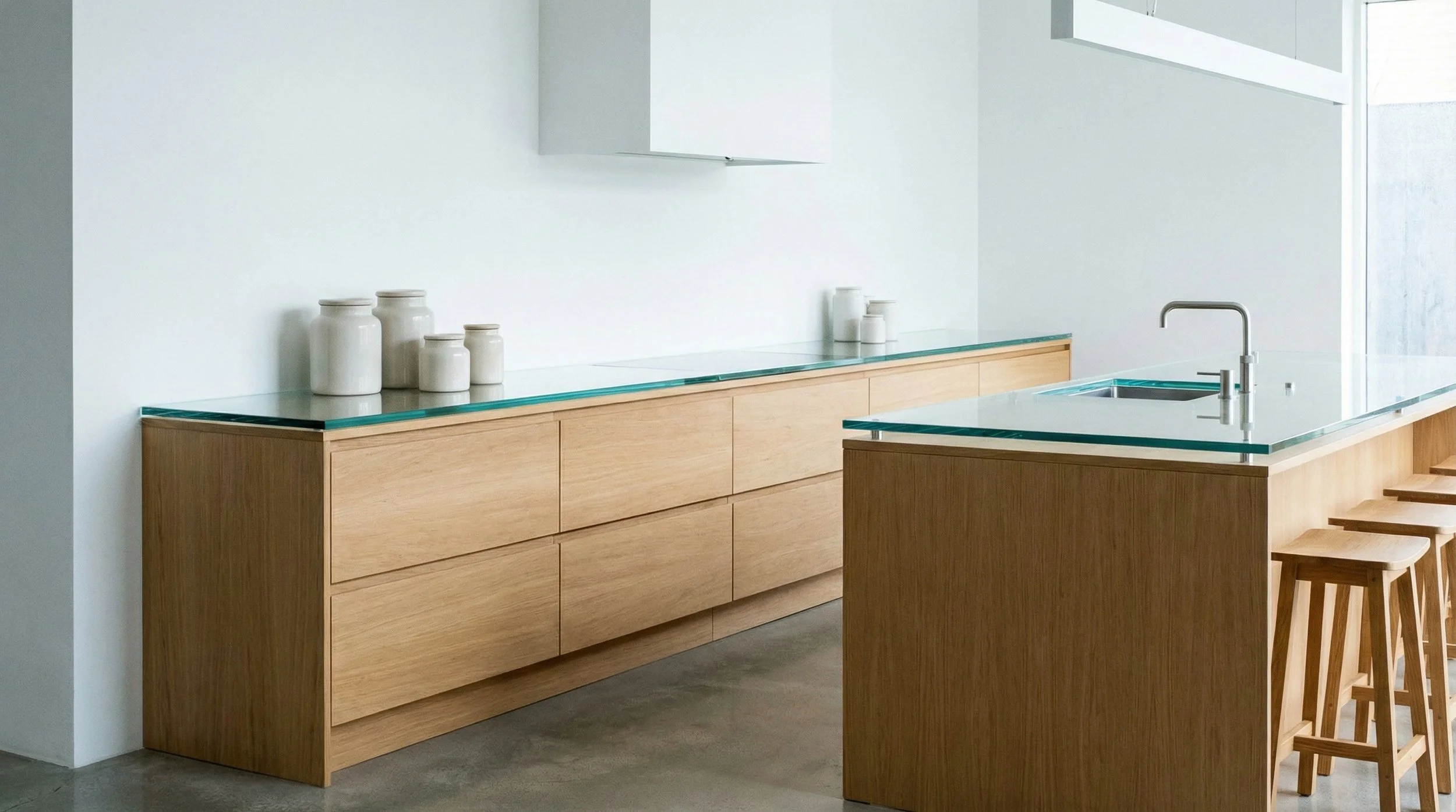
Kitchen: Why Counters Fill Up First
Kitchen counters become cluttered because this is where daily activity happens. It is also where storage is often the least convenient.
When cabinets are overcrowded or difficult to access, items remain out:
Appliances
Cooking tools
Groceries
Papers
A well-designed kitchen system keeps only what you use daily visible, and places everything else in easy-to-reach storage.
This often means:
Clearing one cabinet completely to create breathing room
Using simple jars or containers instead of packaging
Keeping drawers organized so returning items is effortless


Bedroom: Where Clothing Systems Matter Most
Bedrooms become messy primarily because of clothing.
Not laundry. Not clutter. Clothing.
You need three places, not one:
Closet for clean clothes
Hamper for dirty clothes
A rail, hook, or basket for worn-but-wearable clothes
This third place is what most rooms are missing. Once it exists, clothing stops collecting on furniture.


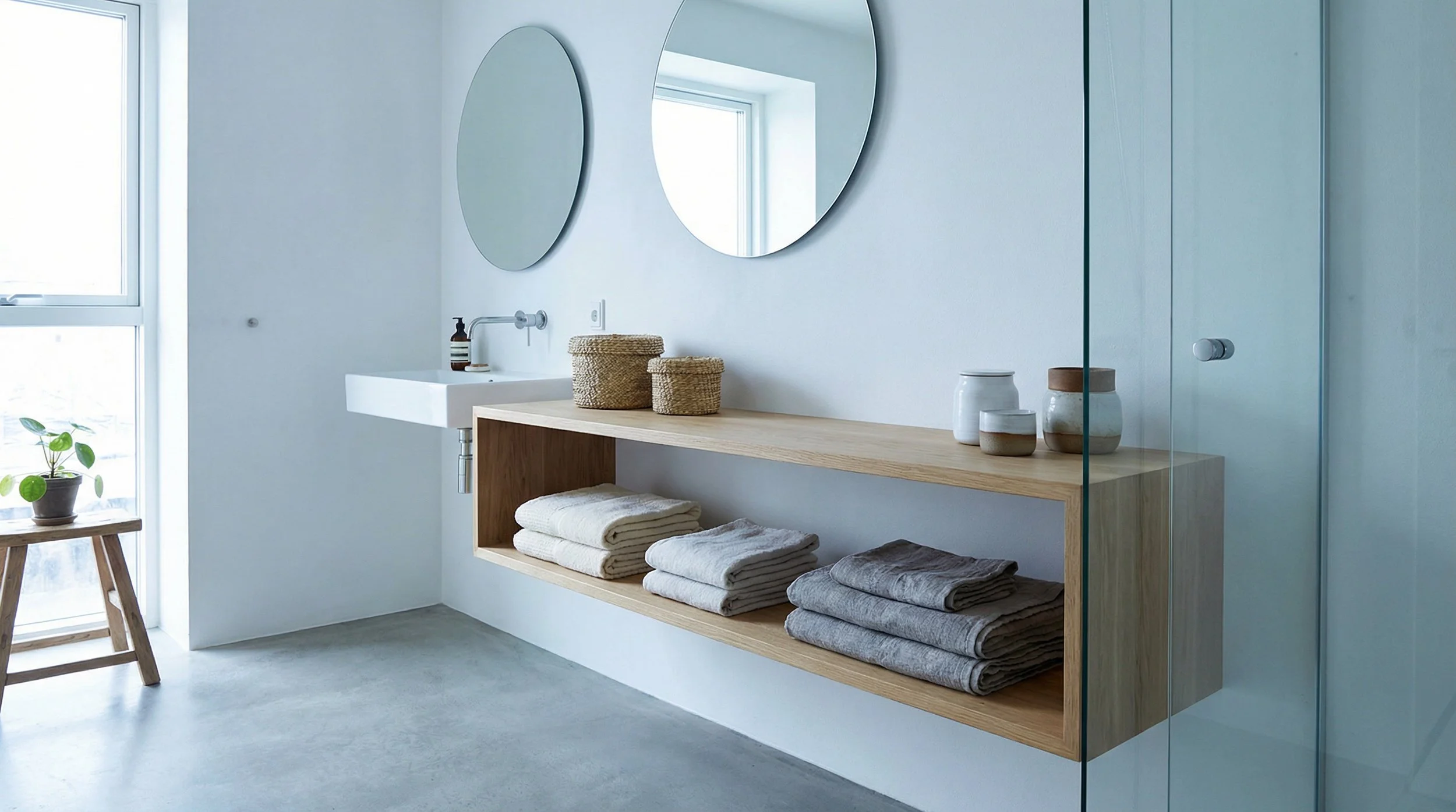
Bathroom: Small Items, Big Mess
Bathrooms collect clutter because of small daily-use items: skincare, hair tools, toiletries.
When these items live in drawers or cabinets that are difficult to access, they stay on the counter.
Open trays, small baskets, or shallow drawers make it easier to return items after use.
The rule is simple: if you use it daily, it needs a visible, reachable place.


Living Room: The Hidden Landing Zone
Living rooms collect items that “don’t belong anywhere else”:
Books
Devices
Papers
Miscellaneous objects carried from other rooms
This happens because there is no small containment system.
A single basket, tray, or shelf dedicated to these temporary items prevents surfaces from filling up.


How to Read Your Own Home
You don’t need to guess what systems you need. Your clutter already tells you.
Walk through your home and ask:
Where do things consistently land?
What items never make it back to their “proper” place?
Where do surfaces fill up first?
These spots are not problems. They are instructions.
They show you exactly where to add a hook, a basket, a tray, or a shelf.
Designing for Flow, Not Perfection
A home that stays tidy is not designed to look perfect. It is designed to make daily life easier.
When you design for flow:
You stop fighting your habits
You stop relying on discipline
You stop decluttering the same things repeatedly
You make small adjustments that quietly remove the cause of clutter.
If your home keeps getting messy after decluttering, it is not because you are doing something wrong.
It is because your home is asking for better support.
Once you give every frequently used item an obvious, convenient place to return to, you will notice something surprising:
You stop thinking about keeping the house tidy.
And it simply stays that way.
